


SCOFrance
PartnersFrance : LETG, ALKANTE, CNES
Brazil : UNESP
Useful linksProject page
KeywordsWeb platform, ICU, urban temperatures, real time, awareness raising


UrbaClim, the citizen platform to combat urban heat islands
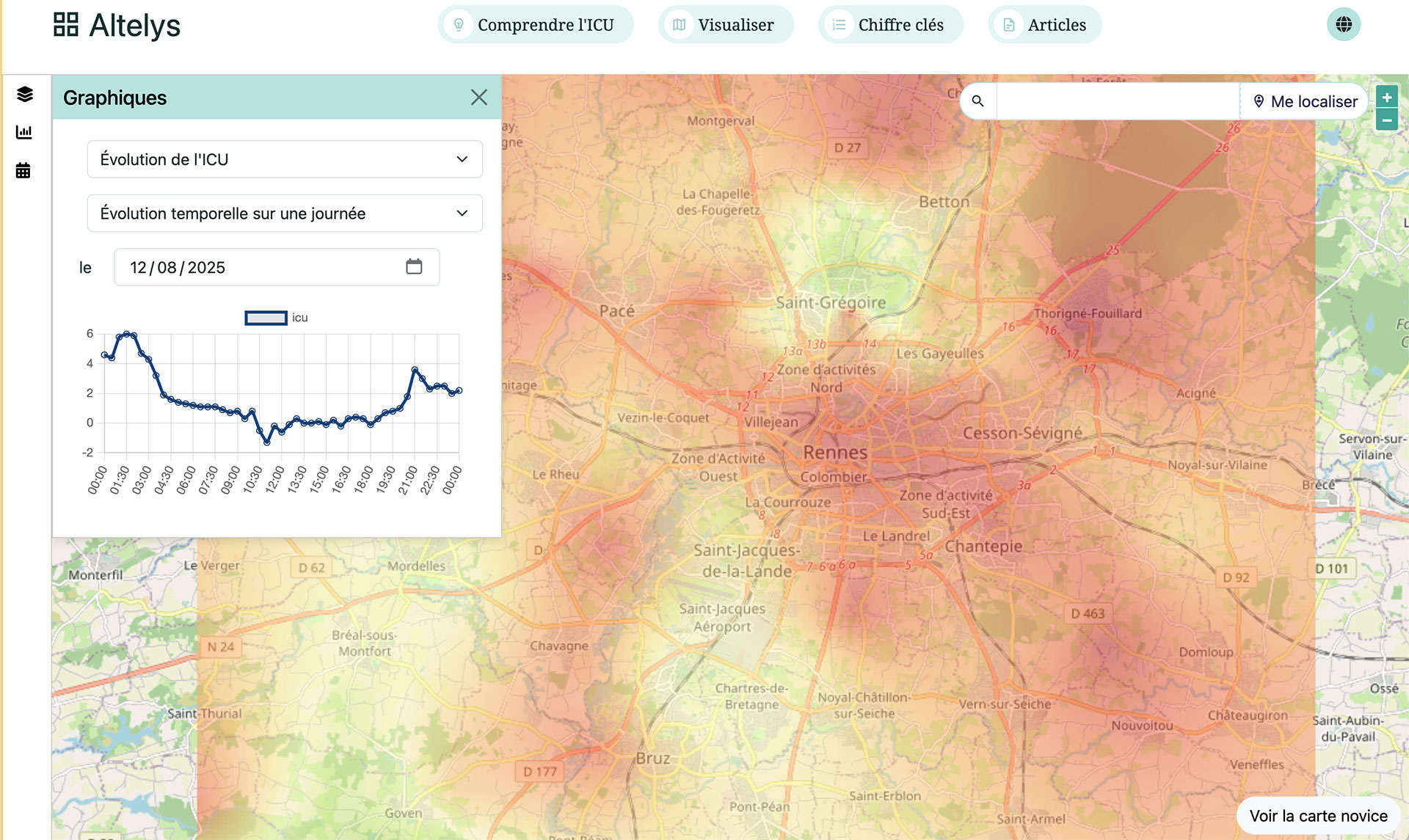
Les îlots de chaleur urbains (ICU) sont des bulles de chaleur qui s’intensifient la nuit (regardez la courbe de l’image), surtout en été, et qui menacent le confort, la santé et la résilience des territoires. Les localiser et les atténuer est un enjeu majeur pour les villes du monde entier.
Urban heat islands (UHIs) are pockets of heat that intensify at night (see the curve in the image), especially in summer, and threaten the comfort, health and resilience of areas. Locating and mitigating them is a major challenge for cities around the world.
A scientific and human adventure
Boosted by the SCO Chove-Chuva project, the scientific/private partnership between the UMR LETG laboratory and Alkante has proved so successful that no challenge is too daunting for them! Since early 2024, two towns with fewer than 500,000 inhabitants on either side of the Atlantic - Rennes in France and Presidente Prudente in Brazil - have served as open-air laboratories for "capturing" ICUs. How? By combining data from in situ sensors and satellite data, but also by working hand in hand with local partners to design a useful and practical tool.
A total of 47 sensors have been installed in Presidente Prudente*, mostly in schools and at residents' homes, while the existing network in Rennes has grown from 95 to 185 sensors, mainly located in public places. These connected sensors measure temperature and humidity in real time, both inside and outside buildings. The data, which is collected every 5 to 15 minutes, is cross-referenced with satellite images (Landsat, Sentinel-2, and soon Trishna and CO3D) to map ICUs with unprecedented accuracy.
* Read the news item from 23 August 2024 on the installation of sensors in Brazil
"To make the data comparable between the two cities, we have deployed a standardized and transferable sensor installation protocol. The sensors are installed in controlled and standardized conditions, three meters above the ground in an unobstructed environment. In addition, satellite data allows our system to extrapolate the UHI at any point in the city, not just where the sensors are located," explains Vincent Dubreuil, Professor and co-leader of the project for LETG.
The result: a platform for the city, its managers and its residents
The heart of the project now beats at urba-clim.com, an intuitive, freely accessible interface that allows users to view UCIs in real time, compare locations and/or dates, and access key indicators such as UHI intensity and humidity. "Citizens can enter their address and see how temperatures have changed over the last five days," explains Arnaud Bellec, co-project manager for Alkante.
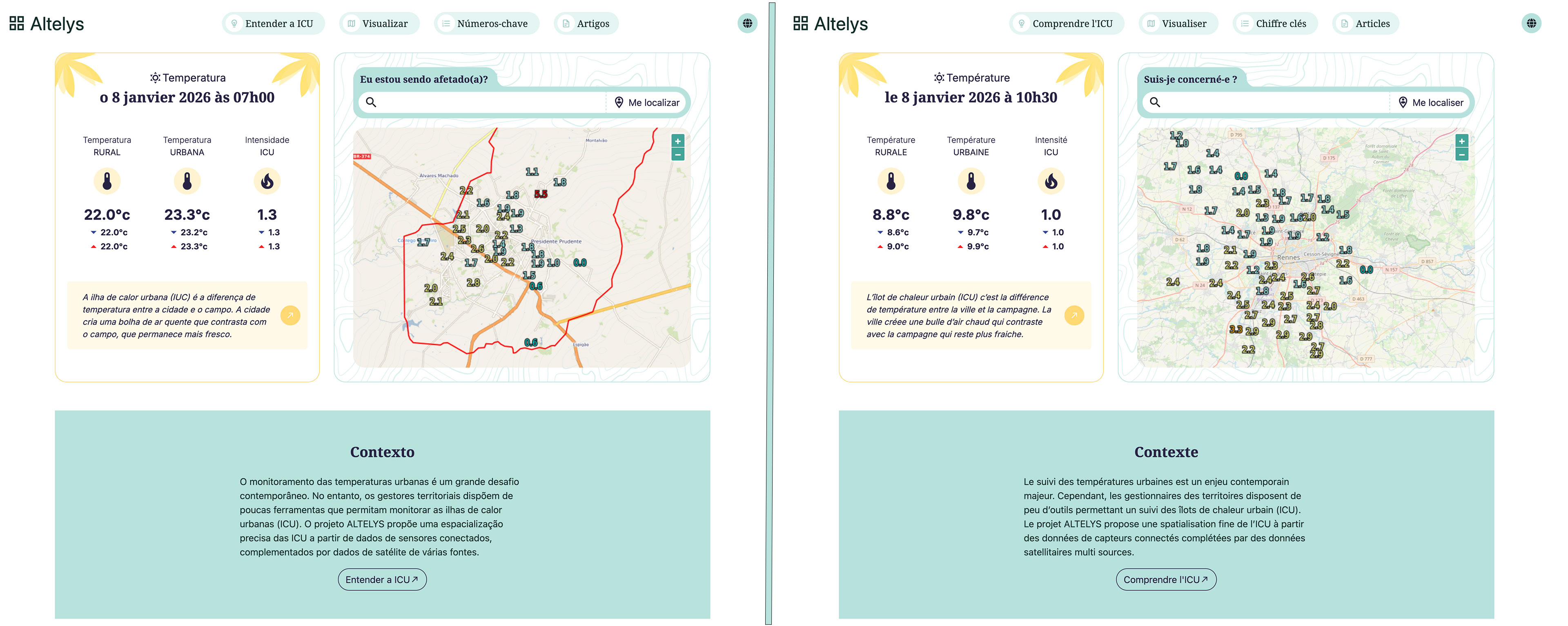
UrbaClim home pages for Rennes on the left and Presidente Prudente on the right. © Alkante
"City managers can request the 'expert' mode [visual at the beginning of the article], which offers more information and features. Typically, with UrbaClim, they can identify priority areas for greening or energy renovation of buildings, based on heat peaks and land use. They also have a user account to publish articles to raise awareness and inform the population, explaining what is happening in the area," he continues.
See the detailed description of the platform on the project page
and/or 🖱️ Go directly to UrbaClim
How do you imagine using Urba Clim in your city?
UrbaClim is not just a tool, it is a new way of city planning, and it is accessible to all cities around the world. "The platform is designed to be applied to any other city in about ten days. The only requirement is to have a network of sensors or to deploy one, in which case the methodology is ready to go!" emphasize Vincent and Arnaud.
Interested? Contact Vincent Dubreuil and Arnaud Bellec
📈 Although the project is coming to an end in its SCO phase, UrbaClim is assured of support until at least 2029 thanks to various projects that will optimize its performance. In particular, there are plans to integrate weather forecasts, urban mortality indicators (humans, trees, insects) for a "One Health" approach, as well as indicators of water stress and thermal comfort.