


The SCO at the International Space Summit
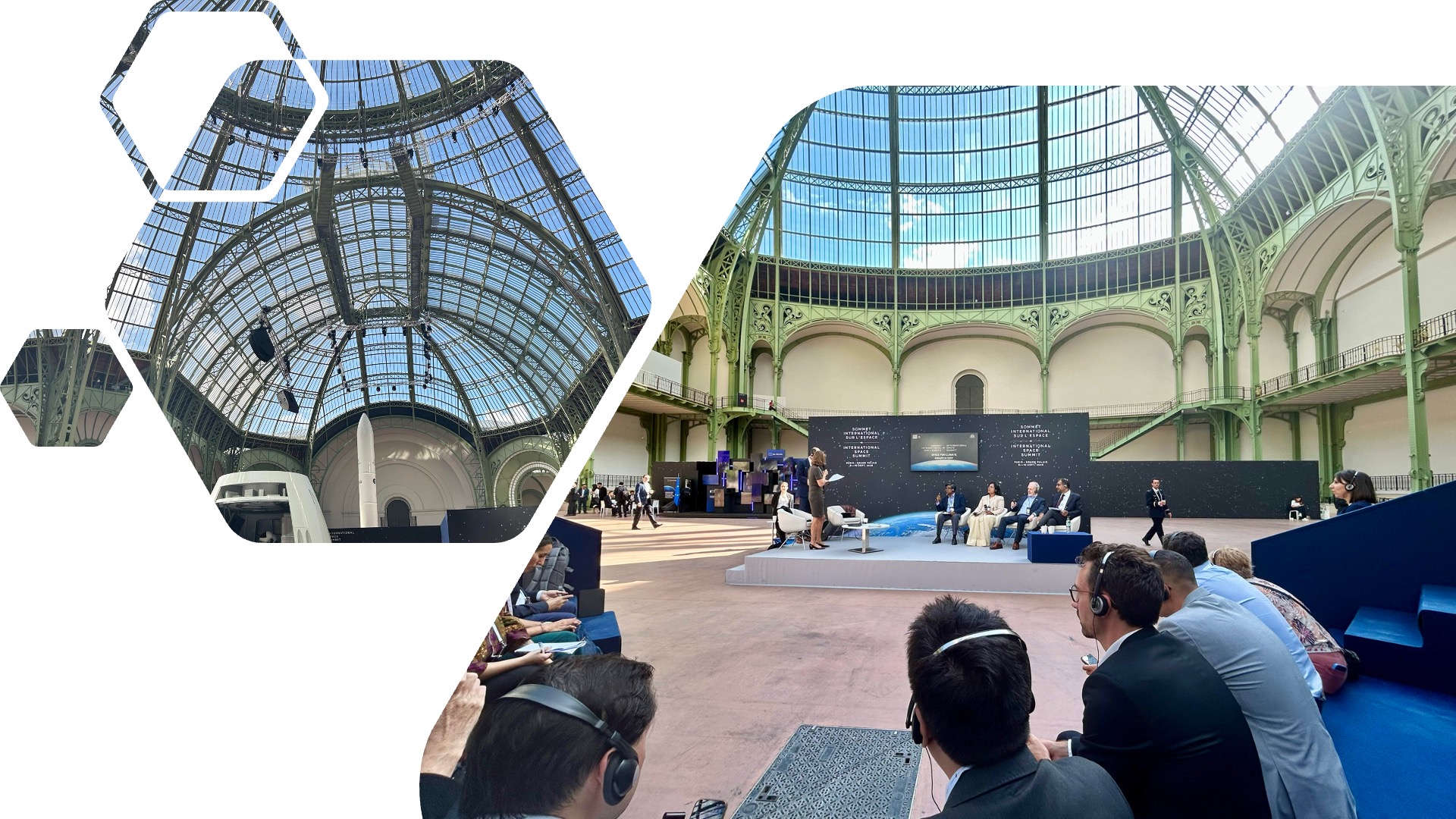
‘We now have extraordinary observation capabilities. […] But data alone does not yet constitute a service. And data alone does not yet constitute a decision. This is precisely the added value of the SCO: starting with a user’s specific problem, mobilizing scientists and experts, identifying the right data, developing a methodology, and then moving on to create an operational tool. This approach has proven its worth.” Extract from the opening address by Laurence Monnoyer-Smith and Frédéric Bretar, heads of the SCO in France.
Welcome to Bangladesh, Scotland and UNOSAT
Undeniably effective, the SCO formula attracts new signatories every year. On 9 September 2026, the SCO Charter was enriched by three new signatures, bringing the Alliance’s total membership to 63:
Bangladesh, represented by the BSCL (Bangladesh Satellite Company Limited)
👉 A new ally that is particularly familiar with the SCO’s effectiveness, having benefited from the BAND-SOS project, led by the IRD and supported by SCO France. Tested under real-world conditions during Cyclone Remal in 2024 (read more here), the operational platform for forecasting cyclonic flooding developed in the Bengal Delta continues to operate.
Scotland, represented by Space Scotland, “the voice of the Scottish space industry”
👉 Scotland has a dynamic network of over 30 companies that use Earth Observation to develop a range of applications.
UNOSAT, the United Nations programme for satellite applications
👉 UNOSAT has become the fourth United Nations body to join the SCO, alongside UNEP, UNDP and UNOOSA.
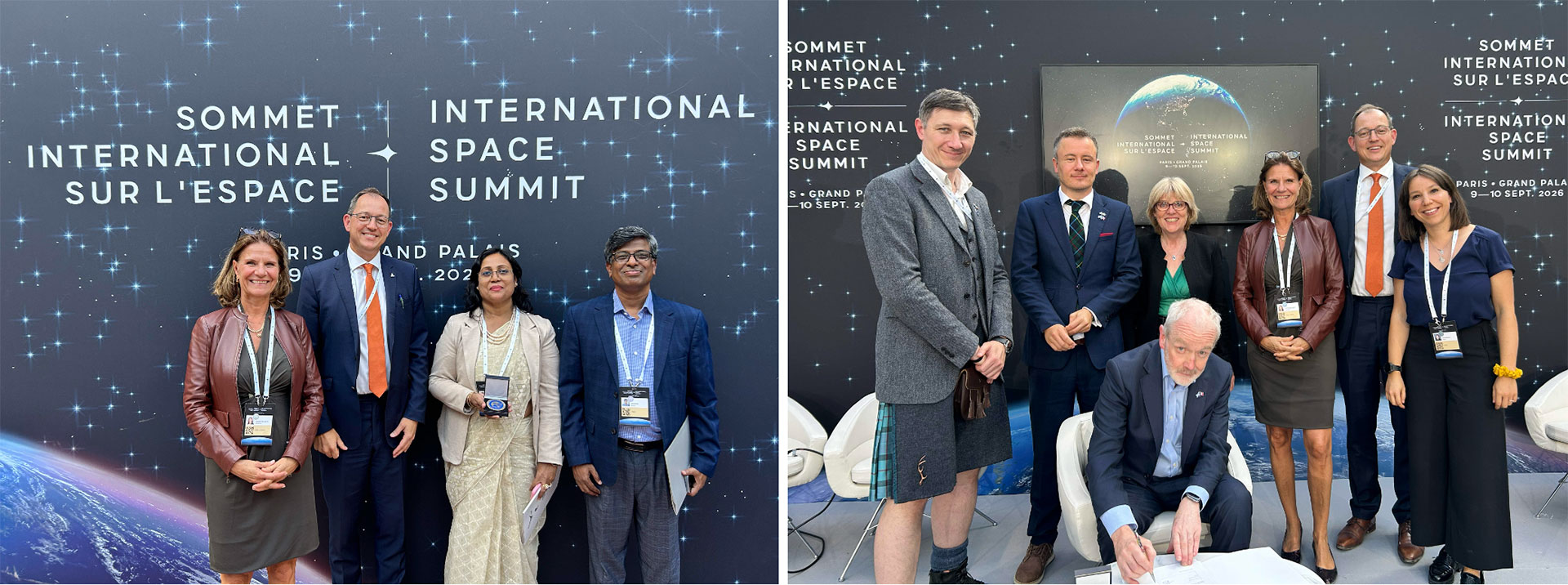
The new signatories, flanked by SCO representatives Laurence Monnoyer Smith, Frédéric Bretar, and, on the far right, Alexia Freigneaux:
On the left: Sayeda Afroz and Golam Sarowar, representatives from Bangladesh,
On the right: Andrew Fournet, Daniel Smith, Sonda D’Alton, and Peter Young (signing), representatives from Scotland.
2 must-read announcements
As climate change accelerates and the need for adaptation grows, the SCO is taking action through both continuity and innovation.
The 2027 Call for Projects is now open As has been the case every year since the SCO’s inception, this call for projects aims to foster new projects, new partnerships and, above all, new operational solutions, both in France and internationally.
|
The first SCO World Virtual Congress is coming soon 🗓️ from 16 to 20 November 2026, running alongside COP31 With 12 thematic sessions, this major congress is set to become the SCO Alliance’s flagship event: speakers from over 30 countries will take part in this event, addressing the SCO community gathered online. |
|
“The SCO must be fully engaged at COP; in this way, we will speak with one collective voice: that of space in the service of the climate, with data, solutions and a mobilized international community.”
3 projects in the spotlight
As symbols and ambassadors of the SCO’s effectiveness, projects are regularly invited to present their solutions at major events in which the alliance participates. At the Space Summit, this platform was offered to:
Marc Lucas of CLS, project lead for the SeSaM project, which has implemented an open platform for monitoring and forecasting Sargassum algal blooms;
Basile Goussard and Adrien Mazeau, co-founders of NetCarbon, who have developed Target 2050, an online application for assessing and optimizing the climate performance of urban development projects;
Alix Roumagnac, CEO of Predict Services, who presented the GADE LAPLI tool, currently in use in Haiti (and adaptable to other places), for the real-time monitoring and forecasting of hydrometeorological risks.